Live Roulette UK: Casinos, Licensing and Play
 Available in GB
Understand how licensing applies to remote roulette, what live tables offer, and which claims about bonuses, free play and winning can be verified.
Table of Contents
- Live Roulette Casinos and Great Britain’s Licensing Framework
- Online Roulette: Live Tables and the Development of Casino Streaming
- Roulette Casino Sites and the Difference Between Table Games and Slots
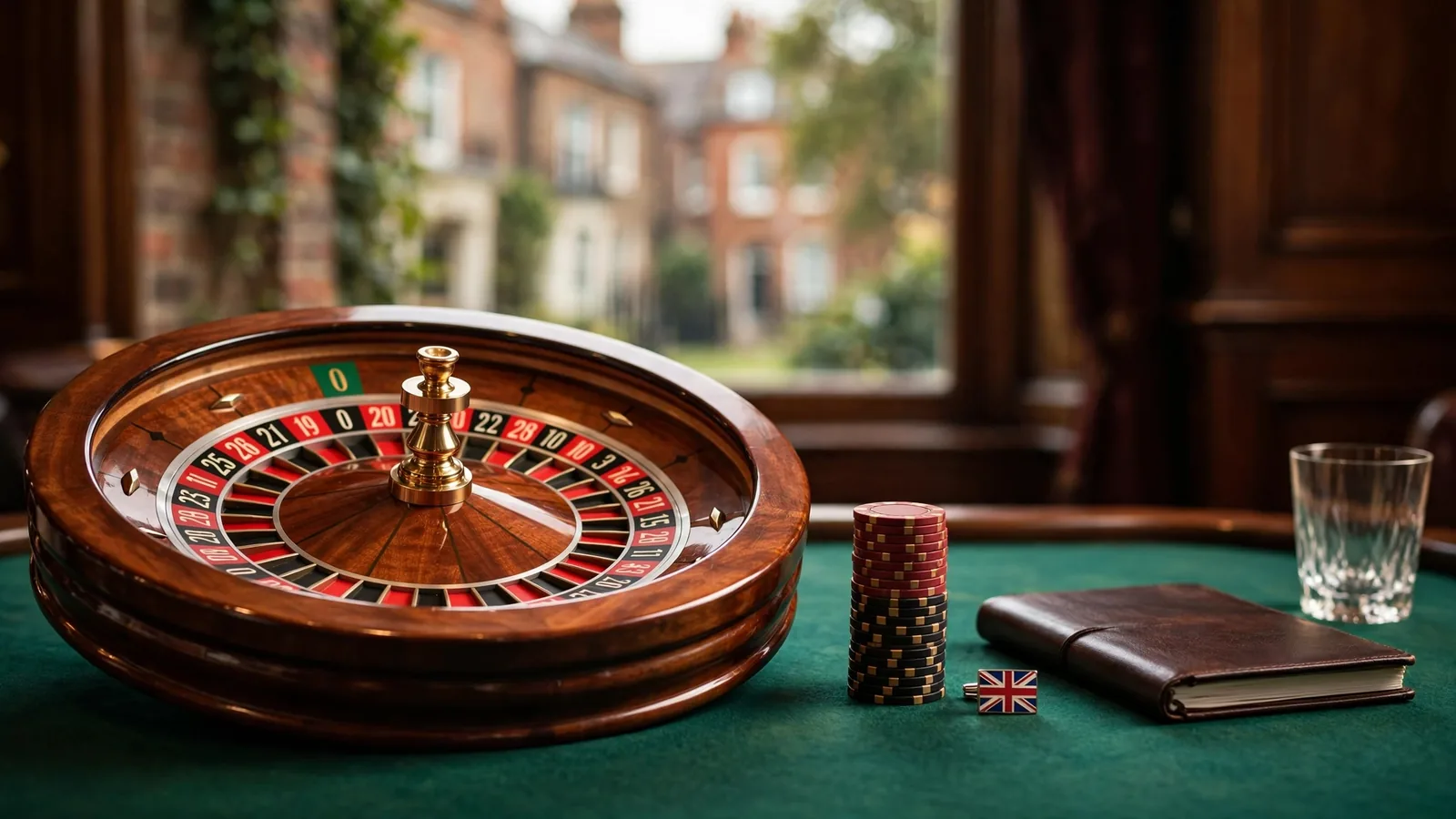
- Roulette as a Live Casino Table Game
- Assessing Roulette Casinos Without an Unsupported ‘Best’ Ranking
- Playing Live Roulette and Managing Deposits and Limits
- Roulette Casino Bonuses: What the Available Evidence Can Establish
- Free Roulette Play and the Limits of What Can Be Verified
- Roulette Odds, Winning Claims and the Limits of Prediction
- Lightning Roulette as a Named Live-Casino Variant
Live Roulette Casinos and Great Britain’s Licensing Framework
A live roulette casino is an online gambling service that offers roulette through a live-casino format. In the UK market, the important regulatory question is not where the studio or other technical equipment is situated, but whether the operator is authorised to provide remote gambling to consumers in Great Britain. The licensing framework therefore applies to the business behind the service, not simply to the presentation of a roulette table on a screen.
The UK Gambling Commission oversees gambling activity across the United Kingdom, including online casino services. In Great Britain, it is the sole regulator for commercial gambling. That distinction matters when assessing a roulette casino UK service: a company’s location, branding or use of a particular platform does not by itself establish that it may legally offer remote gambling to customers in Great Britain. The relevant issue is whether the business holds the required authorisation from the regulator.
For remote gambling, the Commission’s jurisdiction follows the market being served. An operator offering gambling remotely to consumers in Great Britain must hold the relevant licence even if its key equipment is based elsewhere. A studio or server outside the country does not, on its own, remove the licensing requirement. This principle applies to online casinos and to the businesses providing their gambling services, rather than being limited to operators with premises in Great Britain.
The framework is based on the Gambling Act 2005, which governs gambling in England, Wales and Scotland. Northern Ireland has a separate legal context and is not covered by that Act. As a result, references to a “UK roulette casino” should not obscure the territorial scope of the rules: the Commission regulates commercial gambling in Great Britain, while the UK-wide description of gambling oversight needs to be read with the relevant regional distinctions in mind.
The Commission issues operating licences to businesses and personal licences to individuals whose roles in gambling operations require them. These are different forms of authorisation. An operating licence concerns the business conducting the gambling activity; a personal licence applies to an individual carrying out specified operational functions. A casino service may involve both corporate and individual responsibilities, but the existence of one type of licence should not be treated as proof that every relevant party holds the other.
Mines Casino Game UK: What the Evidence Shows
This division helps explain why a roulette casino cannot be assessed solely by looking at its game catalogue or its public-facing name. The regulated entity is the business responsible for offering the gambling service. Where a brand is used by a company, the brand name and the licensed business name may not be identical. The regulatory question is whether the business that provides the service is authorised for the relevant activity and market. The Commission’s public register is the official place to check licensing information.
A live format does not create a separate exemption from remote-gambling rules. Whether roulette is presented through a live casino interface or another online format, a business offering it remotely to consumers in Great Britain remains subject to the applicable licensing requirement. The physical location of the equipment is not the determining factor. Nor does the use of a third-party game provider, by itself, replace the operator’s responsibility to hold the relevant authorisation.
The distinction between a regulated operator and an unlicensed service is consequential. Under the British framework, online gambling is legal for customers aged eighteen and over when it is provided by an operator holding a UK Gambling Commission licence. Offshore casinos outside the Commission’s system do not hold that licence; their availability online does not make them licensed to serve the British market. The regulatory status of the operator, rather than the appearance of a roulette table or the language used on a website, is what establishes whether the service falls within the licensed market.
For a roulette casino serving Great Britain, licensing is therefore a threshold condition, not a quality ranking or a guarantee about the experience of play. The Commission’s role is to regulate commercial gambling and authorise eligible businesses and relevant individuals. It does not follow that every licensed service is identical, or that the licence itself supports claims about a particular table’s features. Those are separate matters from the legal permission to offer gambling.
Financial Risk
Gambling carries financial risk; only money that can be afforded to lose should be wagered.
Before depositing, the operator’s licence number should be checked against the UK Gambling Commission’s public register. That check helps confirm that the business is authorised for the relevant market and activity; a website’s own statement of status is not a substitute for the register. Gambling also carries financial risk, so only money that can be afforded to lose should be wagered.
Our top casino picks for the UK
- BritsinoBonus: Welcome Package – Get your £2,200 + 2,000 FS · Payout speed: 1-3 business days
- ZombillionBonus: Welcome Pack 250% up to £4000 + 200 FS · Payout speed: 1-3 business days
- EvoSpinBonus: 125% up to €2500 + 125 Free Spins · Payout speed: 1-3 business days
- Revery PlayBonus: 100% up to€1,000+ 100 FS · Payout speed: 1-3 business days
- NightLuckBonus: Welcome Pack + 805% Up To 6400€ + 280 FS · Payout speed: 1-3 business days
- DieselwinBonus: Welcome Pack 250% up to £4000 + 200 FS · Payout speed: 1-3 business days
Online Roulette: Live Tables and the Development of Casino Streaming
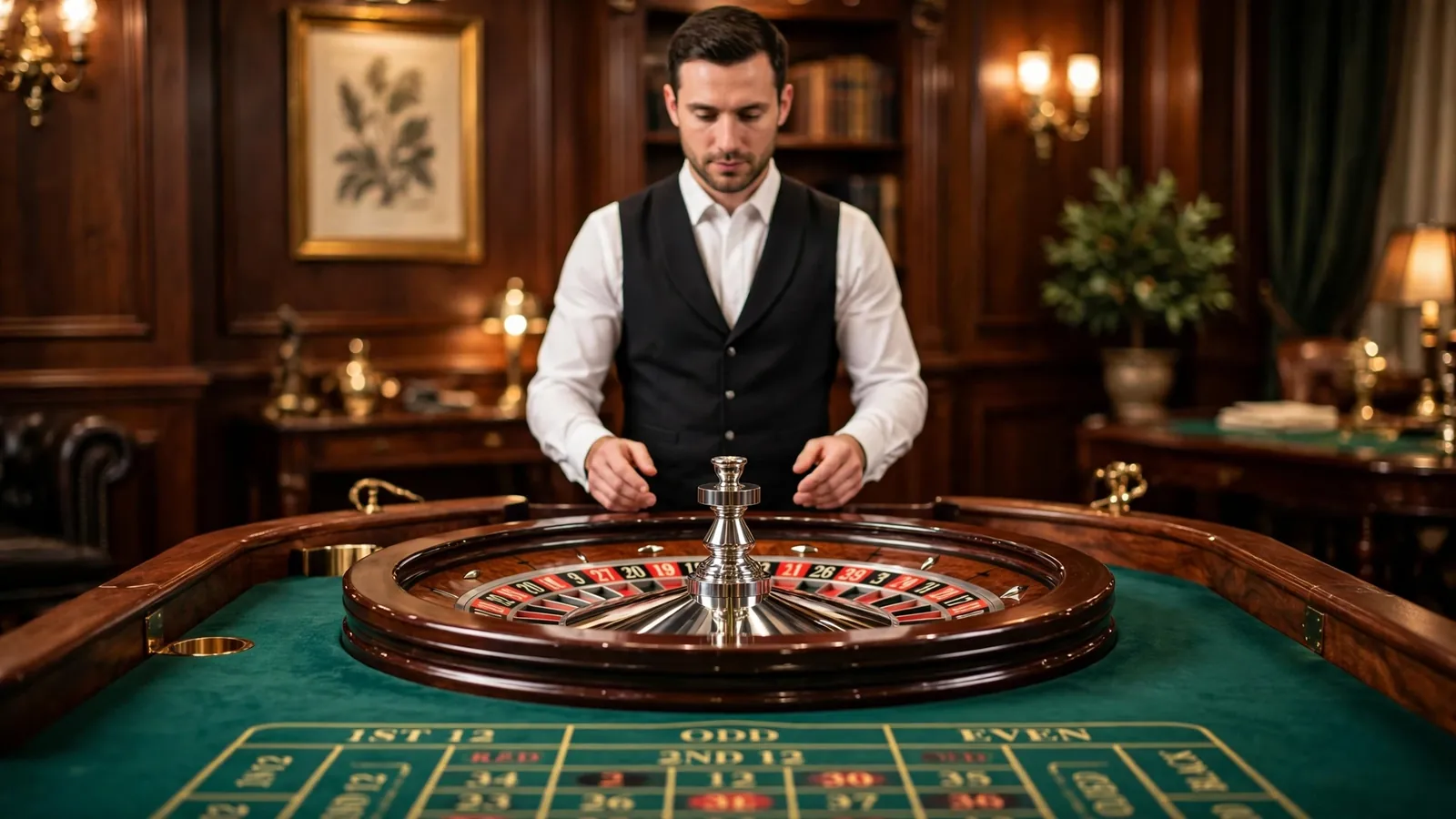
Online roulette can refer to different digital formats. In a live-casino setting, the defining feature is a video connection to a roulette table, with a dealer presenting the game while participants interact through an online interface. The screen therefore combines a streamed view of a table with controls for submitting wagers. This differs from an entirely computer-generated presentation, where the visual sequence is produced digitally rather than shown as a live table.
Streaming changes how an online casino presents roulette, not the basic idea of accessing a casino game remotely. The video feed supplies the visible action; the interface carries the participant’s choices and displays relevant information. A player does not need to be physically present at the table to follow its progress. The experience remains mediated by a screen, but the live format connects the online session to a dealer-led game taking place elsewhere.
This combination helps explain why “online roulette” is not a single, uniform format. A site may present a digital version of roulette, a live streamed table, or both. In a live session, the camera view and the interface serve different purposes: one shows the dealer and table, while the other enables interaction. The stream is not merely decorative footage. It is the visual channel through which the current round is followed, alongside the digital controls used to participate.
Live Dream Catcher Casino UK: What to Verify
The development of live casino streaming is best understood as a gradual change in how casino games could be delivered online, rather than as a single invention with one clear starting point. A dated example from the UK market is Grosvenor’s launch of live casino games in 2013. Its offering included card and casino games such as Blackjack, Texas Hold’em and Roulette. That example establishes that live casino roulette formed part of a named operator’s online offering by that year. It does not, by itself, establish when streaming first appeared across the industry or how quickly it spread.
The broader significance of a streamed table lies in the connection it creates between remote access and a live presentation. Before live formats became part of online casino menus, digital play could be understood primarily through software-generated interfaces. A live table adds a dealer and a camera view to that setting. The interface remains necessary, since it conveys the participant’s choices and the state of the session, but the presentation is no longer limited to graphics generated entirely on screen.
This shift also affects the way an online casino organises its catalogue. Live roulette may appear alongside other live games, while separate digital versions sit elsewhere in the same service. The category label alone may not explain which format is being offered. Details such as a visible dealer, a continuous table feed and interaction controls indicate a streamed session. In contrast, a game presented solely through computer-generated graphics does not become a live table simply because it is available online.
Historical Context
In 2013, Grosvenor launched live casino games in the UK, including Roulette, Blackjack, and Texas Hold’em.
The word “live” describes the presentation and operation of the table, not a guarantee about the quality of the stream or the nature of the connection. A video feed can make a remote session look closer to a casino table, but the participant still encounters it through a screen and a software interface. This distinction matters when describing the product: live casino roulette is an online service built around a streamed table, rather than a physical visit or an unmediated view of play.
The 2013 Grosvenor example is useful because it anchors the format in a specific UK operator’s history without requiring a broad claim about the industry’s first live casino. It also places roulette among a mixed selection of casino games, rather than treating streaming as a technology developed solely for roulette. The same general format can support different table games, with each session organised around its own presentation and interaction.
For anyone comparing online casino roulette formats, the central distinction is therefore how the game is presented. A live table uses a streamed view and dealer-led presentation; a non-live digital version relies on a software-rendered display. Both can be accessed online, but they should not be described as the same experience. The growth of live casino services made the streamed format a visible part of online roulette, while the available historical example supports a specific milestone rather than a complete chronology.
Roulette Casino Sites and the Difference Between Table Games and Slots
A roulette casino site may offer several kinds of gambling product under one roof, but roulette and online slots are not interchangeable categories. Roulette is a table game, whether presented with a live dealer or through another online format. Slots are separate games with their own rules and regulatory treatment. The fact that both may appear on the same casino website does not make the restrictions for one apply automatically to the other.
Online Casino Without ID in the UK: What Checks Apply
This distinction is especially relevant to Great Britain’s online slot stake rules. A specialist gambling review reports that the maximum stake for a slot game cycle is £5 for adults aged 25 and over, and £2 for adults aged 18 to 24. The figures concern online slots; they should not be read as general casino stake limits. The same review states that the slot limits do not apply to roulette or blackjack. That is a category distinction, not a claim that every roulette table has the same conditions.
For anyone comparing roulette casino sites in the UK, a product label is therefore important. A roulette table remains roulette even when it is delivered online, while a slot remains a slot whether it has a traditional theme or a more elaborate presentation. A casino’s overall catalogue may combine both, but the applicable rules depend on the game being played rather than the broad label attached to the website.
The difference also affects how casino information should be interpreted. A statement about a slot stake cap cannot, by itself, establish a limit for roulette. Conversely, a roulette table’s displayed wagering conditions do not describe slot rules. Product pages and game descriptions should be read in context, with attention to whether they refer to a table game or a slot. Broad marketing terms such as “casino games” can cover both and may not identify the relevant category.
Do
- Distinguish between table games and slots
- Check product labels for specific game rules
Don’t
- Apply slot stake limits to roulette
- Assume a general casino label identifies a game category
This is why a list of roulette casino sites should not be treated as a list of slot casinos, even where the same operator provides both. The site may host a live roulette table alongside slots, but their presence together does not erase their separate classifications. For a comparison focused on roulette, the relevant question is whether the casino offers roulette and how that game is presented—not whether it also has a large slot selection.
The term “best” does not resolve this distinction. A site described as a leading casino may be assessed for its overall catalogue, while a roulette-focused comparison concerns a narrower product category. Without a stated basis, such labels do not establish that a particular roulette table is better or that the site’s slot conditions are relevant to it. The available distinction is more concrete: slot stake rules apply to slots, while the cited review says roulette is outside those limits.
Casino categories matter for both compliance and clear comparison. Keeping roulette separate from slots prevents a rule attached to one game type from being mistakenly applied to another. Any gambling should be limited to money that can be afforded to lose.
Roulette as a Live Casino Table Game
Roulette is a casino table game in which outcomes are determined by the movement of a wheel and a ball. In a live casino, it sits alongside other table games as a distinct category: its central equipment is the wheel, while card games are organised around cards and a dealer’s handling of them. This difference gives roulette a recognisable identity without making it interchangeable with every other live table offering.
Online Casino American Roulette in the UK: Rules & Licensing
The broader live-table setting brings games traditionally associated with physical casinos into an online casino environment. Roulette remains a table game in that setting, rather than becoming a slot simply because it is accessed digitally. The distinction is useful when describing casino games: roulette belongs to the table-game category, while slots have a different format and are subject to separate rules. Its classification depends on the game itself, not on the device used to access it.
There is historical evidence of roulette appearing in a UK operator’s live-casino range. Grosvenor first introduced its live casino games in 2013, with an offering that included Blackjack, Texas Hold’em and Roulette. That record places roulette within a wider collection of live card and casino games. It establishes that the game was part of Grosvenor’s launch offering, but does not by itself establish the present range at any particular casino or describe how individual tables are currently presented.
The name “live roulette” refers to roulette offered as part of a live casino, but the label alone does not establish that every provider or operator presents the game in the same way. Nor does the presence of roulette at one operator demonstrate that the same table options are available elsewhere. A casino’s game catalogue is specific to that operator and may change; historical evidence about one launch should therefore be read as evidence of that launch, not as a general statement about all UK casinos.
Roulette
A table game defined by the movement of a wheel and a ball.
Blackjack
A live-table card game involving a dealer’s handling of cards.
Texas Hold’em
A poker variant presented within a live-table casino setting.
Roulette’s place among live casino table games can be described without assuming that it is more important, more popular or more suitable than the other games in the category. The available example from Grosvenor shows it grouped with both a card game such as Blackjack and a poker variant such as Texas Hold’em. These games share a live-table setting, but each remains a separate game type. For roulette, the wheel is the defining element; that broad description does not require claims about particular versions, table rules or likely results.
As with any form of gambling, participation carries a risk of losing money. Gambling should be limited to money that can be afforded to lose.
Assessing Roulette Casinos Without an Unsupported ‘Best’ Ranking
Calling a site the best roulette casino in the UK requires more than a prominent position in a comparison table. “Best” may refer to different things, such as the range of live tables, the clarity of published terms or the operator’s regulatory standing. Unless a ranking states its criteria and provides evidence for them, its order is a judgement rather than a verifiable finding.
A more concrete starting point is whether the operator is authorised to serve customers in Great Britain. The Gambling Commission requires remote operators serving this market to hold the relevant licence. An entry on the Commission’s public register can therefore support a claim about an operator’s regulatory status. It does not, by itself, establish that the casino offers the most suitable roulette tables, the widest choice or the most favourable limits.
Online European Roulette Casinos in the UK: What to Check
Brand and domain checks matter when assessing a specific casino. A specialist review reported that a check of the Commission’s public register dated 26 September 2026 found no LuckyPays entry under that brand or its stated domain, including luckypays.io. That is a dated finding, not a permanent statement about the operator’s status: register information can change, and the report should not be treated as a substitute for checking the register directly. Nor does a missing match establish what a different business or similarly named brand may offer.
The same distinction applies to claims about a live roulette casino or a casino for roulette. A licence check addresses regulatory status; it does not verify a reviewer’s ranking or prove that a particular table meets an individual preference. A comparison that gives no basis for its ordering should not be read as evidence that its first-listed site has objectively superior roulette.
Claims about table limits need similarly specific support. A maximum wager is a condition of a particular table or operator, not a quality measure that can be inferred from a casino’s name or licence. Without current, identifiable terms, a stated limit cannot serve as a sound basis for declaring one roulette casino better than another. The same caution applies to claims about roulette numbers or strategy: neither a ranking nor a licence establishes an advantage in the outcome of play.
A defensible assessment therefore separates what can be checked from what remains evaluative. Regulatory status can be checked against the Commission’s register; comparisons of table choice, limits and other preferences need clear, current supporting information. Where those criteria are absent, a “best” label is not a conclusion supported by evidence. Any gambling should be limited to money that can be afforded to lose.
Verify Operator Status
- Check the operator’s licence number on the UK Gambling Commission’s public register
- Confirm the operator is authorised for the British market
- Verify the business name against the official register
Playing Live Roulette and Managing Deposits and Limits
Starting real-money play at a live roulette table involves account checks and financial controls as well as choosing a game. In the UK, an operator must verify a customer’s age before allowing a deposit. Online gambling is for adults aged 18 and over when the operator holds a UK Gambling Commission licence. The licence number can be checked on the Commission’s public register before money is deposited.
New customers must be prompted to set a financial limit before making their first deposit. Licensed remote operators must also make account-level limit controls accessible, so limits can be reviewed and adjusted through the account. These tools concern the amount deposited or spent; they do not predict results at a roulette table. A limit is a practical boundary, not a reason to treat gambling as a way to make money.
Payment rules also affect how an account can be funded. UK-licensed casinos cannot accept credit-card payments for gambling, including credit-card funds routed through a money service business. They also cannot accept wallet payments where the wallet allows credit-card funds to be used for gambling. A payment method being available for other transactions does not mean it can be used to fund gambling.
For roulette, it is important not to confuse the rules for online slots with those for table games. A specialist review has reported that Great Britain’s slot stake limits do not apply to roulette or blackjack. That statement is attributable to the review, rather than treated here as a general, enduring rule. In any event, slot limits should not be used to infer a roulette deposit limit: deposit controls and game-specific stake rules are different matters.
Live Baccarat Online Casinos in the UK: Licensing
UK-licensed casinos must provide responsible-gambling tools, including self-exclusion. They must also have an internal complaints process and give access to an approved Alternative Dispute Resolution service. These arrangements are relevant if a concern arises about an account or an operator’s handling of a complaint; they do not remove the need to consider personal spending carefully.
A cautious approach is to decide in advance what can be lost without affecting essential costs, set an account limit accordingly, and stop when that amount is reached. Gambling should involve only money that can be afforded to lose. If gambling is causing harm, self-exclusion and support services such as GamCare, BeGambleAware or Gamblers Anonymous may be relevant.
Roulette Casino Bonuses: What the Available Evidence Can Establish
A promotion described as a roulette casino bonus may refer to a welcome offer, a deposit-linked promotion or a reward associated with live play. The label alone does not establish how the offer works. Its value depends on the operator’s published terms, including which games qualify and what conditions apply before funds can be withdrawn.
A welcome bonus and a deposit bonus are not interchangeable descriptions. One may be presented to new account holders, while another is tied to a payment into an account; neither label, by itself, confirms that roulette wagers count towards any conditions. A live casino promotion may also distinguish between table games, so the word “casino” should not be taken as evidence that every roulette table is included.
Bonus Terms
Attention: A bonus label does not guarantee that roulette wagers count towards conditions or that funds can be easily withdrawn.
The same caution applies to claims about a no-deposit roulette bonus in the UK. The phrase indicates a particular kind of promotional claim, not proof that a current offer exists or that it can be used on roulette. Any such claim should be assessed against the operator’s own terms and the status of the business offering it. In Great Britain, real-money online casino services must be provided by an operator holding the relevant Gambling Commission licence.
For a meaningful comparison, promotional wording needs to be read alongside conditions covering eligible games, contribution rules, expiry, withdrawal restrictions and any maximum conversion of bonus funds. These details can determine whether a promotion has practical value, but no general rule can be inferred from the phrase “roulette bonus”. Terms may differ between operators and between individual offers.
Named games require the same care. A promotion mentioning Lightning Roulette does not, without supporting terms, establish that the game qualifies or that a particular bonus applies to it. Game titles and promotional labels should not be treated as substitutes for the offer’s conditions.
Promotional claims therefore provide a starting point for checking, rather than a reliable basis for estimating value. A clear offer identifies the operator and sets out its conditions; a headline alone does not establish eligibility, usability or withdrawal rights. Any decision to gamble should also account for the possibility of losing the funds used: only gamble what can be afforded to lose.
Free Roulette Play and the Limits of What Can Be Verified
Free roulette can mean a practice mode in which no real-money stake is placed, but that label alone does not establish how a particular casino provides it. An operator may describe a game as free or demo play, yet the availability and conditions of any such mode need to be confirmed on that operator’s own site. It should not be assumed that every UK casino offers roulette without a stake.
Online casino tournaments UK: evidence and rules
This distinction matters when comparing a free table with real-money play. A practice mode does not, by itself, establish that the same table, interface or terms are available when wagering. Nor does a free-play label verify the rules of a particular version, whether it is French Roulette, or the house edge. Those details require information specific to the named game and operator; they cannot be inferred from the word “free”.
The same caution applies to named variants such as Fireball Roulette. A title alone does not confirm that a free version is available, or specify its rules. Claims about free access should therefore be tied to clear operator information rather than treated as a general feature of roulette casinos.
Free play also differs from a bonus. A bonus is an account promotion with terms attached; a no-stake mode refers to playing without placing a real-money wager. Promotional wording should not be taken as proof that a game can be used in a no-stake mode, and the reverse is also true.
Where play involves depositing or wagering real money, the UK regulatory framework applies: operators serving Great Britain consumers must hold the relevant Gambling Commission licence. The regulator’s public register is the appropriate place to check an operator’s licence before depositing. Age checks and account controls also remain relevant to real-money gambling.
Free play does not remove the risks associated with later wagering. Any move from a no-stake mode to real-money play changes the financial consequences, and outcomes in a practice session cannot establish what will happen in paid play. Gambling should be limited to money that can be afforded to lose.
Roulette and Real Money
- Free play does not remove the risks associated with later real-money wagering
- Outcomes in practice sessions cannot predict results in paid play
- Operators serving Great Britain must hold a Gambling Commission licence
- Gambling should be limited to money that can be afforded to lose
Roulette Odds, Winning Claims and the Limits of Prediction
Claims that a particular system can guarantee a roulette win should be treated with caution. A betting pattern may organise how wagers are placed, but it cannot establish that a future result will follow a predictable sequence. No method can support a promise of winning every time.
Roulette outcomes are uncertain, so past results do not provide a reliable basis for declaring what the next result will be. A run of one colour, number or group does not itself prove that the same outcome is due to continue or reverse. Likewise, a winning streak is not evidence that a strategy has secured an enduring advantage.
The phrase “best way to win” can therefore be misleading. It may refer to a preferred way of placing wagers, but preference is not proof of improved results. Without substantiated evidence for a claimed advantage, descriptions such as “sure win”, “guaranteed” or “beat the wheel” should not be taken as demonstrations of reliable prediction. Electronic presentation does not change that distinction: a screen-based roulette game is not made predictable by the way its results are displayed.
A published odds figure also needs context. The rules and available wagering options of a particular game matter, and a figure for one roulette format should not be assumed to describe another. Where those details are not specified, a precise comparison would be unsupported. Even a correctly stated probability describes likelihood, not certainty in an individual result.
Winning claims should be separated from claims about how play is organised. A progression may increase or decrease a wager after a result, while a selection system may focus on particular outcomes; neither description, by itself, proves that losses can be avoided or that a profit will follow. Systems that depend on continuing to wager also cannot guarantee that a player will have the funds or opportunity to continue.
Roulette should be approached as gambling with uncertain outcomes, not as a predictable source of income. No strategy removes that uncertainty, and money may be lost. Only gamble what can be afforded to lose.
Lightning Roulette as a Named Live-Casino Variant
Lightning Roulette is a named product associated with live roulette. Its title places it within the live-casino category, rather than identifying it as a slot game. That distinction matters when interpreting references to “Lightning Roulette slots”: the shared word “slots” does not change the product category. Roulette and slots are separate casino-game types, and a search label alone is not evidence that a roulette product operates as a slot.
The name may appear in different forms, including Lightning Roulette casino and live casino Lightning Roulette. These phrases point to the same broad subject: a casino offering of the named roulette variant. They do not, on their own, establish which operator provides it, whether it is currently available to customers in Great Britain, or what its rules and features are. A product name should therefore be distinguished from an operator’s licence and from the conditions under which a particular table is offered.
The UK Gambling Commission regulates remote gambling provided to consumers in Great Britain. Operators serving that market must hold the relevant operating licence, irrespective of where their key equipment is located. The regulator’s public register is the appropriate place to verify an operator’s licence; a game title or a casino’s use of the title is not a substitute for that check.
References to “casino scores” or “First Person” alongside Lightning Roulette also do not establish a rating, a particular mode, or a separate product. Such labels need context from the operator offering the game before they can support a specific conclusion. The name alone is enough to identify a live-roulette variant, but not to infer its mechanics, availability, or performance.
As with any real-money casino game, participation carries a risk of loss. Gambling should be limited to money that can be afforded to lose.
What are the online slot stake limits in Great Britain?
The limit is £5 per game cycle for adults aged 25 and over, and £2 for adults aged 18 to 24. These limits do not apply to roulette or blackjack.
Are online casino games licensed and regulated?
Yes. Remote gambling operators serving consumers in Great Britain must hold the relevant UK Gambling Commission licence, regardless of where their key equipment is located.
Is LuckyPays licensed by the UK Gambling Commission?
The Gambling Commission register dated 26 September 2026 does not list LuckyPays under its brand or stated domain, including luckypays.io.
Created by the ”Betti Casino” editorial team.