Betti Casino’s Outlook: How 2026 Tax and Enforcement Reshape Offshore Play
 Available in GB
Where the offshore segment is heading, and why it matters to you now
I spend a lot of my time trying to read where this market is going, and the offshore segment is the part of it changing fastest right now. Two forces are pulling in opposite directions at once: a tax change that makes offshore operators like Betti more economically attractive, and an enforcement push designed to make them harder to reach. Where those forces leave a player choosing whether to use a non-GamStop casino in 2026 is the question this piece answers, because the segment you can access today is not the segment you will face in two or three years.
The outlook matters because offshore play is not a static choice. The tax reform widening the bonus gap, the enforcement effort disrupting access, and the projected migration of players and stakes are all in motion, and they interact. An operator that looks established today sits inside a market the state has decided to squeeze, which changes the risk profile of relying on it. This is forward-looking analysis, the trajectory of the segment rather than a snapshot, and it draws on the regulatory and market data that competitors in this space never assemble.
I will cover the enforcement crackdown and what it is actually doing, the black-market forecast and where the numbers point, and what the whole trajectory means specifically for someone playing at an operator like Betti. The intent is to leave you able to factor the direction of travel into your decision, not just the current state, because the smart way to assess an offshore casino in 2026 is to ask not only what it is now but where the forces acting on it are taking it.
The enforcement crackdown
The UK regulator has shifted from treating the offshore market as a background nuisance to treating it as a priority target, and the scale of the current enforcement effort tells you how seriously the disruption is now being pursued. This is not rhetoric; it is operational activity at volume.
The numbers convey the intensity. Over a single year the regulator’s enforcement team issued more than 1,150 cease-and-desist notices and referred over 118,000 URLs to search engines, with more than 81,000 removed. In the current financial year a specialist team referred around 200,000 URLs to search engines and tracks the traffic of more than 1,000 illegal operators. This is a sustained, scaling campaign to make offshore sites harder to find, harder to reach, and harder to operate from within the UK, targeting the search visibility and access infrastructure that connect UK players to operators outside the regulated system. The disruption does not shut operators down directly, because they sit outside UK jurisdiction, but it steadily raises the friction of reaching them.
What this means in practice is a slow tightening rather than a sudden closure. An offshore operator does not vanish overnight, but the routes to it degrade, search results disappear, domains get disrupted, access becomes less reliable. For a player, the experience is of an offshore segment that works but works less smoothly over time, with more dead links, more access hiccups, and more effort required to stay connected to a given operator. The enforcement crackdown is the headwind, and it is strengthening, which is the first half of the trajectory you need to factor in.
The black-market forecast
Against that headwind blows a powerful tailwind, because the same tax reform squeezing regulated operators is forecast to push players and stakes toward the offshore segment in large numbers. The forecasts are the most important numbers in this whole outlook, and they point sharply upward.
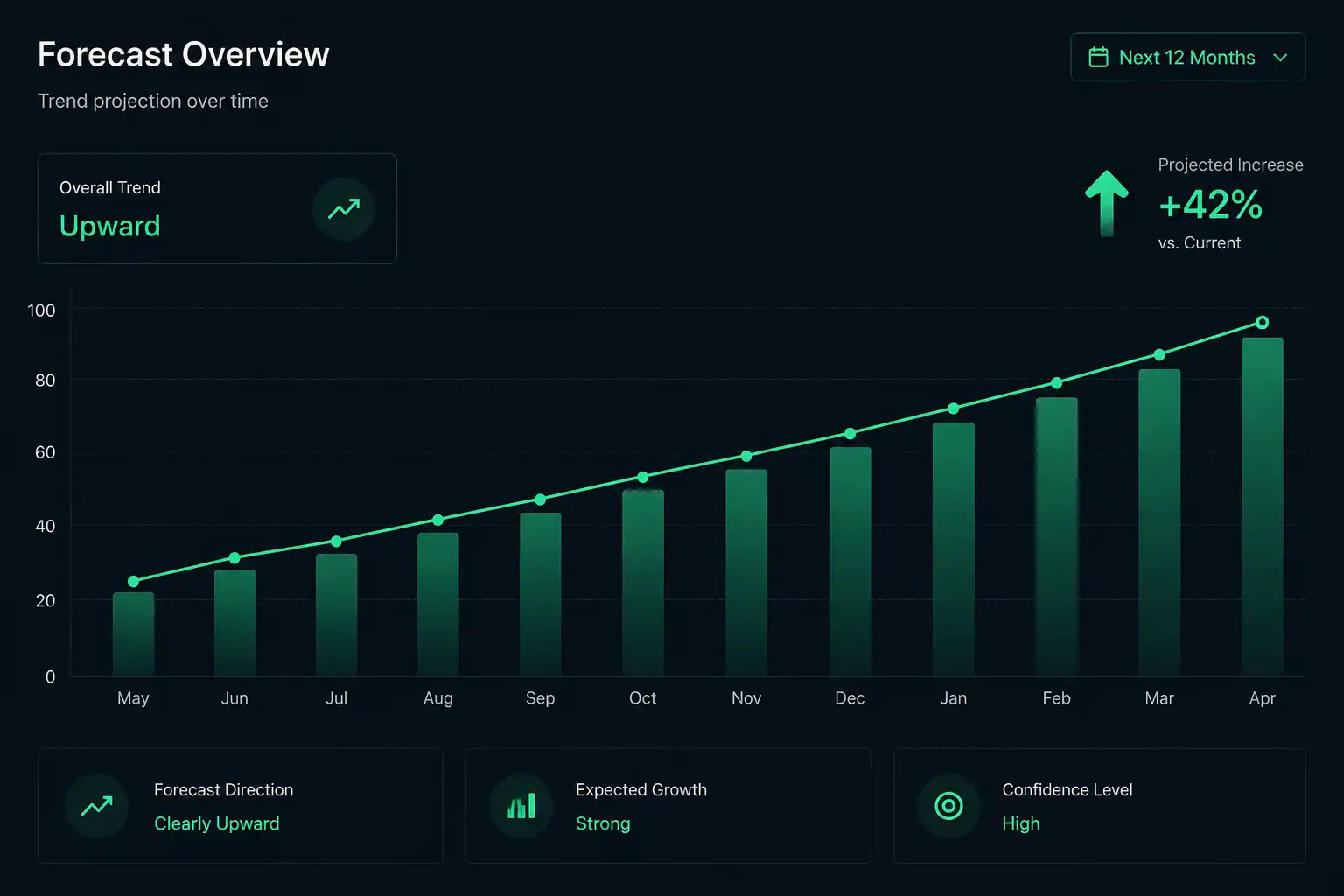
The projected trajectory is steep. The black market is forecast to grow from around £17 billion in staking in 2025 to more than £33 billion by 2028, with nearly one pound in five staked online, around 19 percent, potentially going to unlicensed operators by then. Industry modelling has put the tax reform’s effect at shifting more than £6 billion of staking to the black market, a roughly 140 percent increase in its size. These projections describe a segment expected to grow substantially precisely as the tax gap widens the bonus advantage that pulls players offshore. The enforcement headwind and the tax-driven tailwind are forecast to coexist, with the tailwind currently expected to win on volume even as the headwind raises friction.
The tension between the two forces is the defining feature of the outlook. The state is spending to disrupt the segment, including £26 million allocated over three years to the regulator specifically to combat illegal sites, an investment that itself signals the expected scale of player migration. Yet the projections suggest the segment grows anyway, because the economic pull of untaxed bigger bonuses outweighs the friction of degraded access for enough players to expand the market substantially. The realistic forecast is not that offshore play disappears or that it grows unimpeded, but that it expands under increasing pressure, larger but harder to access, more popular but more disrupted. That paradox is where the segment is genuinely heading.
What it means for Betti players
So what does this trajectory mean for someone actually playing at Betti, as opposed to someone studying the market? The implications are practical and they sharpen the case for caution without dictating a decision. The direction of travel changes the risk you are taking on.
First, expect access to get less reliable over time. The enforcement effort targets exactly the routes you use to reach offshore operators, so the smooth access of today should be treated as temporary rather than guaranteed, and a player relying on a specific operator should not assume uninterrupted access will persist. Second, expect the segment to remain economically attractive on the surface, because the tax gap keeps offshore bonuses larger, which means the pull that drew you will not weaken and may intensify, making the discipline of valuing offers honestly more important, not less. Third, and most significantly, recognise that you are choosing to operate in a market the state has explicitly decided to constrain, which is a different proposition from a stable, accepted segment, because the trajectory is toward more pressure, not less.
The single most useful way to hold all this is to treat offshore play as a contested, shrinking-access, expanding-volume space heading into a period of intensifying regulatory pressure, rather than as a settled alternative to the regulated market. The forces are clear even if the exact outcome is not: tax keeps the pull strong, enforcement keeps the friction rising, and the segment grows under strain. A player who factors that trajectory in plays with appropriate awareness that the ground is moving, that today’s access and today’s operator are subject to forces actively working to disrupt them. The economic engine behind the whole dynamic, why the tax gap makes offshore bonuses bigger in the first place, is the foundation of this outlook, and the breakdown of why the 40 percent gaming duty makes Betti’s bonuses look bigger explains the force doing most of the pulling.
Will UK enforcement shut down sites like Betti?
Not directly, because offshore operators sit outside UK jurisdiction and cannot be closed by the regulator the way a licensed operator could. Instead, enforcement disrupts access, referring hundreds of thousands of URLs to search engines, issuing cease-and-desist notices, and degrading the routes UK players use to reach offshore sites. The realistic effect is a steady tightening: operators do not vanish overnight, but access becomes less reliable over time as the disruption effort scales.
How big could the offshore market get by 2028?
Forecasts point sharply upward. The black market is projected to grow from around £17 billion in staking in 2025 to more than £33 billion by 2028, with nearly one pound in five staked online potentially going to unlicensed operators. Industry modelling attributes much of this to the tax reform shifting over £6 billion of staking offshore, a roughly 140 percent increase. The segment is expected to expand even as enforcement raises the friction of reaching it.
Written by the editors at Betti Casino.