
Betti Casino Restrictions: Age, Country and Who Can Actually Register
 Available in GB
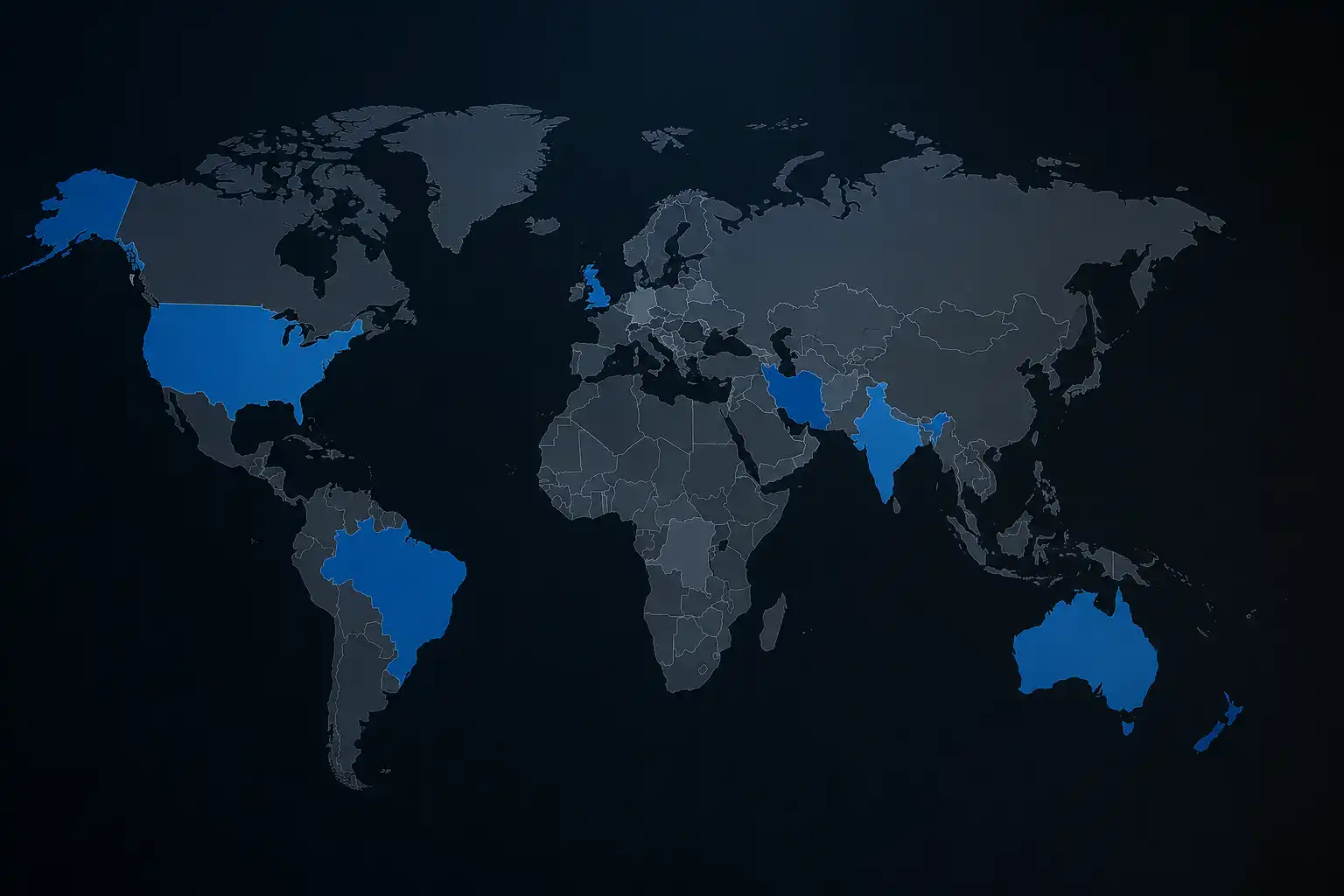
The rules about who gets in tell you who the operator answers to
One of the quickest ways I assess an offshore casino is to read its restrictions, because who an operator refuses to serve reveals more about its real obligations than any marketing page. The countries it blocks, the ages it enforces, and the way it handles UK access together sketch the operator’s actual regulatory posture. Betti Casino’s restrictions, like every operator’s, are a map of the jurisdictions it must avoid and the rules it cannot ignore, and reading that map tells you a great deal about the operator behind the brand.
Restrictions come in two main flavours that work very differently. Age restrictions are near-universal and seriously enforced, because serving minors is a red line in every jurisdiction and exposes an operator to consequences it cannot afford. Country restrictions are commercial and regulatory, blocking jurisdictions the operator is barred from or chooses to avoid, which is why the blocked list differs from operator to operator. Understanding which restrictions are hard rules and which are choices clarifies what kind of operator you are dealing with and what its priorities are.
What follows covers age verification and how an offshore operator manages it without UK regulatory tools, the restricted-country list and what it signals, and the specific question of UK access status, which is more nuanced than a simple yes or no. Read this way, any offshore casino’s restrictions become an informative document rather than boilerplate to skip past, because the rules about who gets in are quietly some of the most revealing text on the whole site.
Age verification
Nothing in a casino’s restrictions matters more than how it handles age, and the way an offshore operator without access to UK regulatory infrastructure enforces the 18-plus rule is worth understanding for what it reveals about the operator’s overall discipline. The threshold itself is universal; the machinery for confirming it is not.
Any credible gambling operator restricts play to adults, and this is treated as a hard perimeter rather than a soft preference at every serious casino, on-shore or off. Where the two segments diverge is in method. A UK-licensed casino plugs into a well-developed national verification stack and must confirm age before any real-money play takes place. An offshore operator does not have that stack available and instead confirms age through its own identity checks, using passport or driving licence uploads that establish date of birth alongside identity. The age question ends up being answered as a byproduct of general KYC rather than at a purpose-built gate before the first spin.
Where that arrangement introduces risk is not in the standard itself but in the timing of enforcement. Some offshore operators defer full verification to the moment of withdrawal, meaning an unverified account can sit briefly in a state where funds have been deposited and play has begun before age has been formally confirmed. A responsible offshore operator still applies the 18-plus rule strictly through those checks, because serving a minor is a red line no jurisdiction excuses regardless of where the licence sits, but the enforcement moment has shifted rather than disappeared. The regulated contrast is instructive: UK rules go a step further and differentiate among adults, capping slot stakes at £2 for players aged 18 to 24 against £5 for those older, a granularity of age-based protection the offshore model does not attempt to replicate.
Restricted countries
The set of jurisdictions a casino refuses to serve is one of the most quietly informative pages on any operator’s site, and reading it as data rather than boilerplate tells you which regulators the operator takes seriously and which it does not. A restricted list is almost never arbitrary, and the pattern of who is on it and who is not carries real signal about how the operator has decided to position itself.
The reasons a country ends up on a blocked list group into a small number of categories. Some jurisdictions are excluded because the operator’s licence does not extend to them and serving those markets would breach the terms of the licence itself. Others are excluded because the country enforces its own gambling laws aggressively enough that the operator has decided the compliance risk of serving it outweighs the commercial return. A third category covers markets subject to payment infrastructure limitations or sanctions considerations that make legitimate settlement difficult. Reading the pattern of blocks, and paying particular attention to any prominent regulator whose country appears on the list, tells you where the operator has made a calculated risk-versus-reward decision to stay away and where it has decided the opposite.
The single most informative question for a British player, however, is what the list says about the UK. Many offshore casinos do not include the UK among their restricted jurisdictions, and that omission is precisely how the non-GamStop segment continues to serve UK-based players, accepting registrations and deposits that a UK Gambling Commission licensee would either refuse or route through a very different compliance path. The UK’s absence from the blocked list is not, in itself, a signal of welcome; it is a signal that the operator has chosen to serve a market the domestic regulator would prefer it did not, and the whole non-GamStop proposition rests on that specific choice. Reading the restricted list, and locating the UK on it or noting its absence, is one of the fastest structural reads you can get on any offshore operator’s posture toward the British market.
UK access status
The question of whether a UK player can actually reach and use an offshore casino is not the clean binary players usually assume it to be, because access itself has become a contested space between what the operator is willing to allow and what the domestic regulator is actively working to prevent. The honest description is that UK access exists at the moment, but it is neither settled nor guaranteed to stay in its current shape.
Seen from the operator’s side, most non-GamStop-facing casinos, Betti included, do not block UK registrations and do serve UK players who arrive at the cashier. From the player seat, the whole flow, sign up, deposit, play, request payout, works in exactly the way an unrestricted account would elsewhere. The counterpressure lives on the other side of the transaction. The operator is outside UK jurisdiction, but the UK regulator is not outside the ability to disrupt the routes that connect players to that operator, and it has been steadily doing so. That produces a moving picture in which today’s frictionless access can develop unexpected friction tomorrow, without anything about the operator itself having changed.
The scale of the disruption operation gives a sense of how sustained the effort is. The regulator’s dedicated enforcement unit has, in the current financial year, pushed roughly 200,000 web addresses off search-engine result pages and maintains active surveillance on the traffic patterns of more than a thousand unlicensed operators serving the UK market, an ongoing campaign whose purpose is to make offshore sites progressively harder for British players to find. The realistic reading of UK access status therefore has two parts. Offshore operators like Betti generally permit UK play and are not the source of the friction; the UK regulator is actively narrowing the pathways by which UK players reach them, and the direction of travel is toward more friction rather than less. Anyone relying on that access should read it as a contested arrangement, not a settled entitlement, and expect it to become harder over time rather than easier. When access problems do arise, telling a genuine regulatory disruption apart from an ordinary account or connectivity issue matters for what to do next, and the troubleshooting in the guide to Betti login and common access errors is designed to help make that distinction.
Is Betti blocked in any countries?
Offshore operators typically block a set of countries, for reasons including licence limitations, strict local gambling laws, or payment and sanctions considerations. The specific blocked list varies by operator and is informative: it reveals which regulators the operator is wary of. What matters most for a UK player is whether the UK appears on the list. Many non-GamStop casinos do not block the UK, which is how they serve players seeking access outside the regulated system.
How does Betti verify age without UKGC tools?
Lacking access to UK-specific verification systems, offshore operators confirm age through their own know-your-customer document checks, requiring identity documents such as a passport or driving licence that establish you are 18 or over. This happens through general identity verification rather than a dedicated age gate. A legitimate operator enforces the 18-plus rule firmly, since serving minors is a universal red line, but where verification is deferred to withdrawal, a brief window of play may precede confirmation.
Written by the editors at Betti Casino.